Episodes

NotebookLM icon
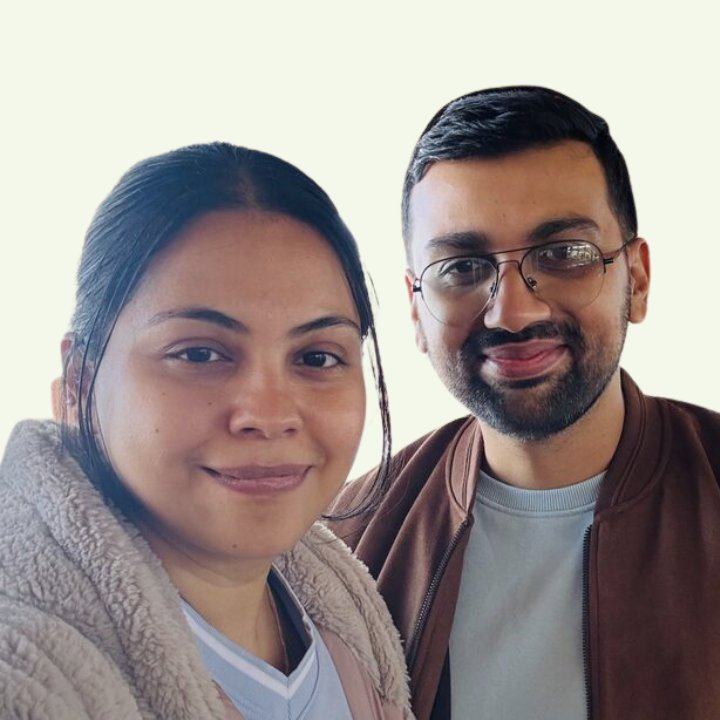
Abhijith HK and Vidhya Abhijith

Abhijith HK and Vidhya Abhijith from Codewave on scaling culture without hierarchy

Abhijith HK and Vidhya Abhijith are co-founders of Codewave, a digital innovation company in India with over 200 employees and zero hierarchy. In this episode, we explore how they built a self-managing organisation from intuition, their peer-based feedback system called Peerly, and how they moved from "ruinous empathy" to radical candor. We also discuss scaling through "Fractas" (mini startups within the company), staying bootstrapped to protect culture, and the personal growth required of founders on this journey.

Ep. 101 1:05:01
Eva Vilella, Trevor Hudson and Kajsa Thelander Sadio

Eva, Trevor and Kajsa from Tuff on the messy beauty of working in a self-managing organisation

For episode 100, Lisa talks with her colleagues Eva Vilella, Trevor Hudson, and Kajsa Thelander Sadio from Tuff Leadership Training about what it's really like to work inside a self-managing organisation. They explore how working at Tuff has transformed each of them, their culture of continuous development with practices like "pebbles" and "mooseheads," and the genuine challenges alongside the beauty – from coordination difficulties to the loneliness of autonomy. A rare inside look at self-management with all its complexity, humor, and humanity.

Ep. 100 1:20:08
Perttu Salovaara

Perttu Salovaara on Radically Decentralised Organisations and leaderless leadership

If we want to practise alternatives to hierarchy, what needs to be in place? Perttu has twenty years' experience as an organisational consultant and I've been really enjoying his research papers on Radically Decentralised Organisations. We talk about the four things needed for a Radically Decentralised Organisation to be sustainable, leaderless leadership, group dynamics we need to be aware of, and some interesting case studies in Finland, particularly in the public sector.

Ep. 99 1:21:53
Timea Kristof

Timea Kristof on the factors for a successful succession process

Handing the baton over to someone else can be risky, especially when it's your company you're handing over. Timea Kristof shares her research on six key factors necessary for a successful succession process to happen, and one of the most important factors might surprise you. It's love. Timea shares insights from her research, including examples of organisations she interviewed such as a family business with three generations of failed successions, as well as her own lived experience of handovers.

Ep. 98 1:10:14
Xavier Costa

Xavier Costa on lessons from self-managing organisations in Spain

Why does Spain appear to be a hotbed for progressive organisations lately? Xavier Costa shares three hypotheses: the implementation of the NER self-management approach in over 100 companies, a rich history of cooperatives, and a culture of innovation in the boundaries of Spain. Xavi also discusses his work with Krysos, an investment fund that buys and transforms traditional companies into self-managed organizations, emphasizing the importance of healing workplace trauma and replacing fear-based leadership with love and trust.

Ep. 96 1:10:35
Tamila Gresham and Simon Mont

Tamila Gresham and Simon Mont from Harmonize on new ways of seeing, being and working together

The way groups are working together is not working. But introducing new structures alone is not enough. Tamila and Simon talk to me about how we need to develop our ways of seeing, being and working together if we want to act in the highest possible alignment with our vision. A key part of this is using the lens of Power, Belonging and Justice (PBJ) and strengthening our muscle in Conflict Resilience. Strap in for some powerful wisdom, giggles and deep learning.

Ep. 95 57:35:00
Etienne Salborn and Tonny Wamboga

Etienne Salborn and Tonny Wamboga on SINA, self-organisation and ‘freesponsibility’

SINA (Social Innovation Academy) is a network of social enterprise incubators in Uganda and neighbouring countries with a mission of supporting marginalised young people to create their own solutions to social problems in their communities.There are currently more than 10 SINA communities which have catalysed 70+ social enterprises and more than 500 jobs. The goal is to create a global movement of 1,000 SINAs and 100,000 social enterprises by 2035.

Ep. 94 54:05:00
Tirzah Enumah and Mike Arauz

Tirzah Enumah and Mike Arauz from August Public Inc. on psychological safety, equity and inclusion

In this episode with Tirzah Enumah and Mike Arauz from August Public Inc., we explore the nuanced difference between psychological safety and comfort, revealing how true psychological safety requires embracing discomfort rather than avoiding it. We discuss practical strategies for creating brave spaces where teams can engage in productive disagreement, the critical role of equity in determining who feels safe to speak up, and how subtle leadership behaviors can either build or erode trust.

Ep. 93 55:44:00
Miki Kashtan and Emma Quayle

Miki Kashtan and Emma Quayle from NGL on the capacity lens as a path to reinvent ourselves and our organisations

Miki is the seed founder and Emma a founding member of the Nonviolent Global Liberation community (NGL), which runs entirely as a gift economy. They and NGL as a whole are knee-deep in visionary experimentation about what it would take to realign humanity with life through online and community living experiments. We explore the "capacity lens" - a framework for organizational transformation that starts with realistic assessment of where we are rather than forcing idealistic visions - and discuss how to honor individual and collective capacity limits, embrace baby steps over radical overnight changes, and replace coercion-based systems with willingness and authentic collaboration.

Ep. 92 53:33:00
Miquel, Blanca and Pau

Miquel, Blanca and Pau from Deerns Spain on becoming a self-managing engineering company

Deerns Spain, a team of around 60 engineers, has been on a transformation journey since March 2020. Inspired by K2K Emocionando, they now work without managers which means that everyone is “creating our company all the time”. I talked to Miquel Castellvi (General Coordinator), Blanca Capdevila (People & Culture) and Pau Riera (Commitment Coordinator) who shared stories about how they changed their organisational structure, their self-managing salary process, giving feedback and dealing with conflicts, and the role of the Values and Culture team.

Ep. 91 1:05:43
Ted Rau

Ted Rau on parallels between Relationship Anarchy and self-management

What can the realm of self-management and new ways of working learn from the realm of polyamory, Relationship Anarchy and open relationships? And how can practices in self-organising work teams help us improve our personal relationships? Ted Rau is the co-founder of Sociocracy for All and author of books like 'Who Decides Who Decides?' and 'Many Voices One Song'. In his personal life, he has been in monogamous relationships and, for the last seven years, in open relationships.

Ep. 89 58:21:00
Jessica and Douglas Rauch

Jessica and Douglas Rauch from Aquadec on tradesmen and teal

Douglas Rauch was thinking of selling his construction business until he read Reinventing Organisations by Frederic Laloux. After that, Aquadec went on a transformation journey to becoming a self-managing company. Douglas and his daughter Jessica share the ups and downs of this process over the last five years, including why their initial approach was a spectacular failure, why it was an inner shift that ended up making the difference, and something called “S**t Day.”

Ep. 88 52:02:00
Kimberly Loh

Kimberly Loh on Compassionate Conversations and understanding our patterns in conflicts

Kimberly Loh works in the worlds of conflict resolution, coaching, embodiment and mindfulness. She is also the co-author of ‘Compassionate Conversations: How to Speak and Listen from the Heart.’ We talk about learning to be aware of patterns we have when it comes to engaging with conflict, and Kim shares some ground rules for having ‘Compassionate Conversations’, as well as some really useful self-reflective practices to help us be more conscious of how we show up in conversations, especially ‘difficult’ ones. We also cover topics like power, hierarchies, and why human beings rarely learn how to 'do' conflict well.

Ep. 87 52:18:00
Bernadette Wesley

Bernadette Wesley on bridging inner and outer transformation

Bernadette Wesley’s work is all about bridging the world of inner development with the world of being in an organisation together. We talk about Deliberately Developmental Organisations (DDOs); self-organisation and why changing structures is not enough; the Inner Development Goals (IDGs); and three practices that Bernadette has found particularly powerful: Peer Learning Spaces, Immunity to Change Maps, and Emotional Freedom Technique (EFT) Tapping.

Ep. 85 1:05:21
Jon Alexander

Jon Alexander on the possibility of opening up a Citizen Future

Jon Alexander is the author of the hugely popular 2022 book ‘Citizens: Why the Key to Fixing Everything is All of Us’. He talks to me about the people he interviewed and the stories he collected which show how it’s possible to go from what he calls a ‘Consumer’ mindset to a ‘Citizen’ mindset – like Taiwan’s innovative approach during the COVID pandemic. We also discuss the Three P’s of Participatory Organisations, what leadership would need to look like in a Citizen Future, and why we should try to create ‘safe uncertainty’.

Ep. 84 50:33:00
Ruth Waterfield and Taryn Burden and Philippa Kindon

Ruth, Taryn and Philippa from Mayden, a health tech company that's Made Without Managers

Three authors of the book ‘Made Without Managers: One Company’s Journey to New Ways of Working’ join me to talk about what they have learned at Mayden, a cloud based health tech solutions organisation in the UK. Ruth Waterfield (developer and scrum master), Taryn Burden (product owner of Mayden’s new ways of working) and Philippa Kindon (coach) share how Mayden’s ways of working have evolved over the years, including what career progression looks like, the role of directors in a bossless organisation, and what have been their biggest challenges.

Ep. 82 1:09:44
Erik Korsvik Østergaard

Erik Korsvik Østergaard on fragmented organisations and futures literacy

Erik is an executive advisor on transformation and the future of work, leadership, and collaboration, and the author of ‘Teal Dots in an Orange World.’ We talk about how this 'new ways of working' movement is evolving, and in particular a positive trend that Erik calls 'fragmented organisations' that's happening because it's hard to scale self-managed or 'teal' practices and principles in a uniform way. Erik shares what he has observed, particularly in larger organisations, including challenges like interfacing with the outside world when you are a progressive organisation. Finally, we explore leadership and 'futures literacy' as an important skill. I love Erik's articulate and thoughtful style and I think this was a great sense-making conversation.

Ep. 81 50:40:00
Mette Aagaard

Mette Aagaard on how a public sector organisation with 8,000 employees is exploring autonomous teams

For the past year, the Municipality of Slagelse in Denmark has been experimenting with autonomous teams. Of the 8,000 employees, some 25-30 units so far have opted in to learn how to make decisions as a team using key principles of Sociocracy. Mette Aagaard, Head of Development, shares what they have been learning and why she thinks it is the responsibility of the public sector to develop societies, and workplaces, that are fit for humans.

Ep. 80 58:12:00
Lina Maskoliūnė

Lina Maskoliūnė on lessons from a self-managed business experiment in Lithuania

Lina shares the story of her time at Finnish commercial real estate company Technopolis where she led the transformation of the Lithuania business unit. Inspired by Frederic Laloux's book Reinventing Organisations, she got the mandate from her boss to run her business unit of 20 people in a totally different way, with no managers. She shares the story of what her team learned, the challenges they faced, and the results they achieved.

Ep. 79 1:04:29
Sofia Reis and Luís Alberto Simões

Sofia Reis and Luís Alberto Simões on experiments guided by autonomy and connection at Mindera

Sofia and Luís talk about the self-organisation journey at global software engineering company, Mindera. With 900+ employees and counting, they have evolved as a company without managers through experiments guided by questions like: Will this bring more autonomy? Is it human friendly? This has resulted in some remarkable employee-designed processes, like their self-managed salary system, and their unique office space in Porto, Portugal.

Ep. 78 1:28:24
Aaron Dignan

Aaron Dignan on using software to help scale new ways of working

Aaron Dignan, author of Brave New Work and founder of The Ready, is back on the podcast, this time to talk about how his new software startup, Murmur, can help organisations scale new ways of working. We talk about the importance of team agreements and how to keep them alive, plus what Aaron and his colleagues have been learning from their latest explorations in the worlds of self-management, DAOs and their Brave New Work podcast.

Ep. 77 58:51:00
Ria Baeck and J.D. Nasaw

Ria Baeck and J.D. Nasaw on trauma informed collaboration

Ria Baeck and J.D. Nasaw. Ria and J.D. are both coaches and facilitators who combine scientific research of trauma with embodied practices of collective intelligence and wisdom. In our conversation, we discuss questions like: what does trauma have to do with new ways of working? How can we be more conscious collaborators? What are examples of embodied practices we can use so that our journey of new ways of working is not only an intellectual one?

Ep. 76 1:06:09
Alice Sheldon

Alice Sheldon on needs understanding and the partnership paradigm

Alice Sheldon is the author of ‘Why Weren’t We Taught This at School?’ and the founder of Needs Understanding, an approach for finding creative solutions and building relationships at home and at work. I love how Alice shares practical tools and stories to bring to life some of the principles of Nonviolent Communication. She also coaches me through an example of an organisation where there is a tension between two groups: those who are enthusiastic about self-management and those sceptical about it. A great episode if you want to upgrade your self-awareness and communication skills.

Ep. 75 52:57:00
Matt Perez

Matt Perez on going from a fiat hierarchy to a radical company without bosses or employees

Matt Perez realised that his successful career as a boss in a Silicon Valley tech company had made him a worse person and so he co-founded Nearsoft in 2007 to be a company that works for everyone. His recent book, Radical Companies Without Bosses or Employees, takes self-organisation one step further to include co-ownership so that people aren’t dependent on what he calls ‘enlightened monarchs.’ We talk about what he’s been learning, including the development of a distribution mechanism that decentralises ownership and supports egalitarian and equitable wealth sharing based on contribution.

Ep. 74 44:50:00
Kate Beecroft

Kate Beecroft on the critiques and possibilities of DAOs

Kate Beecroft works on ecosystem and community building at Centrifuge, the decentralised asset financing protocol. She has been involved in Decentralised Autonomous Organisations (DAOs) since 2018 and brings to them her experience of self-managing organisations as the co-founder of Greaterthan and a long-time member of Enspiral. We talk about common critiques of DAOs and Web3, as well as how we could share learning more across the worlds of self-managing organisations, DAOs and cooperatives.

Ep. 73 56:36:00
Marwa Farouq

Marwa Farouq on new ways of working, diversity, equity and inclusion at Teach for All

Marwa Farouq leads the Global Operations Circle in Teach for All, which is a global network of partner organisations developing collective leadership to improve education and expand opportunity for all children. Marwa shares what she’s learned from exploring new ways of working at Teach for All, including dismantling the senior leadership team, moving decisions closer to the work, embracing tensions and liberating untapped leadership through their core value of diversity, equity and inclusion.

Ep. 71 44:44:00
Ravi Resck

Ravi Resck on social systems that foster win-win-win relationships

Ravi Resck was born to hippy parents in Brazil, became a computer network engineer, and then travelled the world as a guitarist, discovering a love of facilitation and social design. Today he goes by tags like hacktivist, org designer, facilitator, and systems mapper, sharing social technologies with others in a fun and accessible way. He works as a consultant at Target Teal, a collective exploring new ways of working, including an open-source fork of Holacracy called Organic Organization (or O2). We talk about why he believes lessons from self-management and Sociocratic-inspired models benefit all organisations, not just the ‘already-converted’, and Ravi shares some of his favourite examples of organisations and communities at the cutting edge of new ways of collaborating. Ravi is definitely one to watch in the future of work space!

Ep. 70 55:05:00
Jos de Blok

Jos de Blok on Buurtzorg and the virtues of humanising, not protocolising

Jos de Blok is the founder of Buurtzorg, a home care organisation in the Netherlands with 15,000 nurses and no managers. We talk about how their decentralised, human approach has helped them during the pandemic, why he believes ‘protocolising things’ in organisations does damage, and his advice for leaders and traditional top-down organisations that are embarking on transformation processes. It was an honour to talk to one of my heroes and to hear him speak with such heart. Enjoy!

Ep. 69 57:29:00
Andy Brogan and Helen Sanderson

Andy Brogan and Helen Sanderson on reinventing performance management (for real!)

The current models for how we measure things in organisations tend to produce compliance at their best, and dysfunctions at their worst. Andy Brogan has developed an alternative tool called Confirmation Practices that he hopes could one day completely shift how we see regulation, accreditation and accountability in general. Joined by Helen Sanderson, we discuss examples of where Confirmation Practices have made a difference (such as in a pathology service) and why this tool helps ‘put the elephant in the room’. It’s all about going from scorekeeping to sense making.

Ep. 67 1:14:40
Pasteur Byabeza

Pasteur Byabeza on transitioning to self-management at Davis College

Pasteur Byabeza is the lead link of the Student Care Circle at Davis College, a higher learning institution in Rwanda. He is one of the pioneers who has been driving the college’s transition to becoming a self-managed, Holacratic organisation. Though they are early in their journey, taking steps like disbanding the global council and replacing management hierarchies with distributed decision making have already had a huge impact on people’s engagement levels. Pasteur shares what he has learned so far with honesty and contagious passion.

Ep. 65 42:57:00
Bayo Akomolafe

Bayo Akomolafe on generative incapacitation and embracing failure

Bayo Akomolafe is a Nigerian author, professor, chief curator of The Emergence Network and is often known for his poetic and provocative take on big topics such as global crisis and social change. We talk about what he calls 'generative incapacitation' and the kind of leadership that’s needed in these times, how the Covid pandemic is disrupting our norms, embracing failure and allowing ourselves to be lost... and I also posed some questions to him about my worries regarding the reinventing work movement. It's a deep conversation so perhaps listen to this out on a walk!

Ep. 64 50:10:00
Jocelyn Davis

Jocelyn Davis on leadership as influence and group development

“Command authority is a poor basis for life.” Jocelyn Davis is an author, speaker and the former head of R&D at global consultancy The Forum Corporation. We talk about how she weaves together the threads of leadership, Eastern philosophy and dramatic literature. Her insights on group development, leadership as influence, and ‘climate’ in teams are really relevant for those interested in self-managing organisations.

Ep. 63 58:49:00
Alex Barker and Sam Conniff

Alex Barker and Sam Conniff on what we can learn from being more pirate

Sam Conniff and Alex Barker’s books ‘Be More Pirate’ and ‘How to Be More Pirate’ have sparked a movement of people around the world who want to shake things up, to create new business models and systems that are better for people and planet. The tagline on their website says: "Being more pirate is a shift in your mindset; a willingness to think differently, to challenge and be challenged, and to stop asking for permission to do what you know is right.” I wanted to talk to Sam and Alex about what we can learn from the golden age of pirates 300 years ago, and to share some examples of organisations that have been inspired to transform.

Ep. 62 50:17:00
Topi Jokinen

Topi Jokinen on levelling up a construction firm with self-organisation

Topi Jokinen is one of the founders of a small Finnish company in the construction sector called Vertia. Since 2018, Topi has been leading a transformation in the company based on the idea of self-organising cells to help it grow and develop. He is perhaps the first CEO I have met who has done this level of personal and professional development and he shares with heart and humility what his leadership journey has been. We also talk about Vertia’s radical structures and practices, such as a transparent and collaborative salary model, as well as what Topi has learned about stepping back and letting go as a co-founder and CEO.

Ep. 61 51:12:00
Anna Thomson and David Baksh

Anna Thomson and David Baksh on Yoghurt Utopia and meaning at work

Filmmakers Anna Thomson and David Baksh talk to me about Yoghurt Utopia, their documentary about a yoghurt company whose mission is to provide work and accommodation for people living with mental illness in the Catalonia region in Spain. Having spent several years with some of the workers of La Fageda and its inimitable founder, Cristobal Colon, they share what they have learned about this remarkable workplace and what lessons we can learn in terms of diversity, inclusion, and meaning at work.

Ep. 60 53:20:00
Yuji Yamada

Yuji Yamada on Reinventing Organisations through a Japanese lens

Yuji Yamada is the founder of EnFlow and is interested in exploring the differences between approaching organisational transformation from a ‘Western lens’ and a Japanese lens. We talk about teal organisations from Frederic Laloux’s book ‘Reinventing Organisations’ (which has sold 100,000 copies in Japan) and Yuji’s homegrown concept of ‘Jinen management’. Could East Asian organisations be at an advantage in developing new ways of working by drawing on their ancient wisdom and inherent cultural paradigms of interconnectedness?

Ep. 59 53:44:00
Richard D. Bartlett and Natalia Lombardo

Richard D. Bartlett and Natalia Lombardo from The Hum on going from a domination to a partnership society

Rich and Nati are the founders of collaboration consultancy The Hum and part of the Enspiral network. Between them, they have a background in activism, engineering, community organising and entrepreneurship and are well-respected thought leaders when it comes to decentralised organisations, self-managing teams and collaborative culture. We talk about personal shifts, ‘trojan horse’ radical practices, and ideas for moving from a domination society to a partnership society.

Ep. 58 1:06:40
Nand Kishore Chaudhary

Nand Kishore Chaudhary from Jaipur Rugs on love, collective consciousness and self-management

Nand Kishore Chaudhary is the remarkable founder of Jaipur Rugs, a company employing 40,000 weavers in 600 villages selling beautiful carpets in 40 countries. The artisans – most of them women in India’s “untouchable” class – are the “heroes of the business”, and self-managed principles like distributed decision making have long been a hallmark of the company. We talk about how N. K. Chaudhary has created a “business ashram”, where people find their clarity of purpose and gain higher consciousness, as well as his thoughts on humble leadership and how Jaipur Rugs will evolve self-management further.

Ep. 57 47:28:00
Anna Elgh

Anna Elgh on self-managing teams and shifting conflicts at Svenska Retursystem

Anna Elgh is the CEO of Svenska Retursystem, a Swedish circular economy logistics company. We talk about the transformations she has led at the company since joining in 2014, from Lean to nearly three years of moving towards self-managing teams. She shares what she has learned about transforming conflicts, distributed decision making, disbanding the management team, as well as leadership and the power of letting go.

Ep. 56 49:43:00
Frederic Laloux with an invitation to reclaim integrity and aliveness

Frederic Laloux with an invitation to reclaim integrity and aliveness

Frederic Laloux is the author of the book 'Reinventing Organisations' and one of the leading figures in the new ways of working movement, coining the term ‘teal organisation’ which consists of three breakthroughs: self-management, wholeness, and evolutionary purpose. We talk about how we can use juicy questions to explore new frontiers of what’s possible in our organisations and lives. Questions like: “Where are you participating in a system where you're actually out of integrity?” Frederic shares examples from conversations he’s had with CEOs of big corporations and inspiring stories he’s encountered of radical initiatives that have come from all levels of organisations.

Ep. 55 1:20:00
Bill Fischer and Simone Cicero

Bill Fischer and Simone Cicero on Haier and the entrepreneurial organisation

Bill Fischer is a Professor of Innovation Management at IMD and Simone Cicero is the cofounder of Boundaryless and co-creator of the Platform Design Toolkit. We talk about what they have learned from years of studying and collaborating with the Chinese company Haier Group, whose Rendanheyi organisational model has been praised internationally as one of the most revolutionary management ideas of the 21st century. Our conversation explores the extraordinary leadership of CEO Zhang Ruimin, eliminating bureaucracy, designing an organisation to enable thousands of self-managed microenterprises, and what this model means for the future of work.

Ep. 54 1:25:48
Jabi Salcedo and Dunia Reverter

Jabi Salcedo and Dunia Reverter on K2K’s 10 keys to becoming a self-managing organisation

Jabi Salcedo and Dunia Reverter are coordinators at K2K Emocionando, a Spanish consultancy that has transformed more than 85 organisations from traditional to self-managing over the last two decades. We talk about the radical components of their methodology, such as removing manager roles, balancing salaries, shared decision-making and profit sharing. Jabi and Dunia share what they’ve learned from the transformations they have been part of, the kinds of shifts they’ve seen, and what some of the biggest challenges can be.

Ep. 53 1:08:25
Dr Tjanara Goreng Goreng and Robyn Katz

Dr Tjanara Goreng Goreng and Robyn Katz on sacred leadership

Dr Tjanara Goreng Goreng is a Wakka Wakka Wulli Wulli Traditional Owner from Central Queensland, Australia, and Robyn Katz is the founder of Talkpoint, which curates peer-to-peer learning experiences to humanise work. We talk about Tjanara’s PhD research which draws parallels between aboriginal culture and eldership, and Robert Kegan’s psychological development research and the idea of “sacred leadership”. Both women share what they have learned through their own personal transformation journeys, and what’s needed now in the world in terms of leadership development.

Ep. 50 1:09:47
Peter Koenig

Peter Koenig on source, money and consciousness

Peter Koenig has spent the last decade researching principles for how founders organise and materialise their enterprises, projects and initiatives – what he calls sourcework. We talk about the role of source and source principles and the idea of seeing organisations as energetic fields. We talk about why his work has sparked debate in “new ways of working” circles, as well as how we can use the lens of source to diagnose decentralised organisations when we seem to get stuck. Peter also shares some insights from 30 years of running money seminars, and why money is such a great place to hide our deepest shadows.

Ep. 49 1:24:46
Luz and Edwin

Luz and Edwin from Ian Martin Group on adaptability in a crisis

Luz Iglesias, Director of Recruitment, and Edwin Jansen, Head of Corporate Development, work at Ian Martin Group, a self-managed, teal recruitment company with 400 employees across Canada and India. They share examples and stories of the initiatives, decisions and creativity that have sprung up in response to the COVID-19 pandemic without any central coordination, and how adaptability and humanity can flow freely in a self-organised system because of the mindset shift it facilitates. As former managers, they reflect on how liberating it is to distribute the responsibility of responding, strategising and taking care of people operations.

Ep. 48 50:26:00
Skeena Rathor

Skeena Rathor on Extinction Rebellion, paradoxes and transformation

Skeena Rathor, who co-leads the Vision Sensing circle in Extinction Rebellion, shares insights from inside this decentralised movement – how their Holacratic, Sociocratic structures support its collective purpose, the work they’re doing with Miki Kashtan to transform power dynamics, and why Skeena’s dream is for XR to become a touchstone for the work of co-liberation. We also talk about how XR is responding to COVID-19 and their AloneTogether campaign.

Ep. 47 54:13:00
Learnlife learners

Learnlife learners on self-determined, lifelong learning

Devin Carberry, Director of Learning Programs, and two learners, 16-year-old Gerard Almenara, and 12-year-old Samir Shariputra Chopra, share their experiences of what it’s like to be part of Learnlife in Barcelona. Learnlife is reinventing education by creating an open ecosystem for a lifelong learning paradigm. People of all ages are supported to become self-directed learners and develop the skills to be responsible community members. This is the future of education and the Learnlife model has much to teach us about how to upgrade our organisations, too.

Ep. 46 54:11:00
Amy Edmondson

Amy Edmondson on psychological safety and the future of work

Amy Edmondson is the Novartis Professor of Leadership and Management at Harvard Business School and the author of “Teaming” and “The Fearless Organisation”. We talk about her journey of researching psychological safety and teaming, as well as the paper she co-wrote about self-managing organisations. Amy shares insightful and practical lessons about leadership, how to be a good team member, and the future of work.

Ep. 45 44:49:00
Vivek Menon

Vivek Menon on ambidextrous organisations

Vivek Menon leads a high growth business unit at Danfoss Power Solutions called eSteering. Their purpose is to build the future steering solutions for off road vehicles. He shares how eSteering works without managers and why he thinks the future of organisations, especially large ones, is building the capacity to be ambidextrous – creating ecosystems where traditionally structured and decentralised teams or units can coexist. Vivek believes there are three components to develop when it comes to self-management: structures, processes, and mindset and behaviours.

Ep. 44 52:38:00
Bonnitta Roy

Bonnitta Roy on sensemaking and open, participatory organisations

Bonnitta Roy is an author, trainer and creator of the OPO (Open Participatory Organisation), which is a framework people are using to experiment with more collaborative ways of working. She is well-loved in the world of Agile for her approaches to complexity and thinking about human systems. Bonnitta shares examples from her work of moves we can make towards more open and participatory organisations.

Ep. 43 58:02:00
Ved Krishna

Ved Krishna on self-management in an Indian paper factory

Ved Krishna is Strategy Head at Yash Pakka, a compostable tableware manufacturer based in Faizabad, India that has been experimenting with organisational self-management since 1999. Ved talks with a lot of heart and honesty about his journey of taking over the family business, then firing himself as CEO and now working from a place of deeper purpose. He also shares the ups and downs of trying to develop self-management in a culture where hierarchy is very strongly ingrained.

Ep. 42 39:51:00
Michael Y. Lee

Michael Y. Lee on lessons from researching self-managing organisations

Michael Y. Lee is an Assistant Professor of Organisational Behaviour at INSEAD who researches novel and innovative ways of organising. After reading the paper he co-authored with Amy Edmondson on self-managing organisations, I wanted to talk to him to get his academic perspective on this phenomena. He shares what we can learn from self-managing organisations about leadership and how to collaborate in a more decentralised way without sacrificing coordination. We also discuss his research into the two key mechanisms that helped foster positive relational dynamics in a global distributed team.

Ep. 41 54:07:00
Bryan Ungard

Bryan Ungard on Decurion and Deliberately Developmental Organisations

Bryan Ungard is the Chief Purpose Officer at Decurion. Decurion is a parent company of a number of businesses, including movie theatres, real estate and senior living, but it's less famous for what it does and more for why and how it does it (as featured in the book “An Everyone Culture”). We talk about Deliberately Developmental Organisations, Bryan’s thoughts on why feedback can be dangerous, what he makes of the trend towards self-managing organisations, and how we can help our organisations become more conscious.

Ep. 40 53:11:00
Beetroot’s founders

Beetroot’s founders on purpose, self-management, and shocking people with trust

Andreas Flodström and Gustav Henman are the founders of Beetroot, a remarkable IT company set up in 2012 to create social impact in Ukraine. We talk about how culture has played an important role in their self-managed way of organising, the challenges of scaling (from 380 to 1000+ in the next four years), and the tough leadership lessons they’ve learned as founders as the company has grown.

Ep. 39 54:20:00
Miki Kashtan

Miki Kashtan on the three shifts needed for self-managing organisations to thrive

Miki Kashtan is an author and an international teacher and practitioner of Nonviolent Communication. In this conversation we talk about the three different places shifts need to occur in order for a self-managing human system to thrive, and how we can start to talk about needs more in order to awaken the collective responsibility of groups of people working together. She also shares the five core systems we need to redesign in our organisations as well as the mindset shifts and dialogue skills we need to develop in order to collaborate on a deeper, more purposeful level.

Ep. 37 47:40:00
Manuel Küblböck

Manuel Küblböck on models for self-organisation at Gini

Manuel Küblböck is an org design and transformation coach at German fintech company Gini. We talk about the models Gini has developed for self-organisation and how they have defined together terms like power, hierarchy, and autonomy. He also shares challenges like how to foster leadership in a self-organising company, how to make decisions effectively together and how to develop healthy relationships within the team.

Ep. 36 43:27:00
Edwin Jansen

Edwin Jansen on how people adopt self-management at Fitzii

Edwin Jansen is Head of Marketing at Fitzii, a recruitment company based in Canada. We talk about the three stages of self-management adoption he’s noticed (Head, Heart, Habit) and why it’s so challenging for us human beings in the “messy middle” stage. Edwin also shares some practices that Fitzii has developed around “radical responsibility”, such as feedback, teal onboarding, and the Role Advice Process, as well as his own personal journey of transformation as a former manager.

Ep. 34 54:28:00
Margaret Wheatley

Margaret Wheatley on leadership and Warriors for the Human Spirit

Margaret Wheatley is an author known for bringing lenses like anthropology and quantum science to the fields of leadership and organisational design. In this thoughtful conversation, she challenges the idea of large-scale change in favour of creating “islands of sanity” and doing meaningful work in a local context. She talks about restoring leadership as a noble profession, her take on the growing number of self-managing organisations today, and how we can train as “Warriors for the Human Spirit.”

Ep. 33 51:34:00
Brian Robertson

Brian Robertson on Holacracy and self-managing organisations (Part 1)

Brian Roberston is the pioneer of Holacracy, a customisable self-management system used by over 1,000 organisations around the world. In Part 1 of this conversation, we talk about some misconceptions about Holacracy, complementary practices to Holacracy like Nonviolent Communication and Authentic Relating, and about Brian’s personal journey to achieving his purpose of changing how people relate to power.

Ep. 31 58:37:00
Keith McCandless and Henri Lipmanowicz

Keith McCandless and Henri Lipmanowicz on acting your way into a new kind of organising with Liberating Structures

Henri Lipmanowicz and Keith McCandless are the authors of “The Surprising Power of Liberating Structures”. We talk about how Liberating Structures can help you “act your way into a totally new way of organising”, for example, reinventing how we do strategy. Henri and Keith share the fundamental principles of Liberating Structures and examples of powerful transformations, in organisations and schools, catalysed by simply having different kinds of conversations.

Ep. 30 52:34:00
Tom van der Lubbe

Tom van der Lubbe on salaries and purpose in self-managing organisations

Tom van der Lubbe, the co-founder of a small, Dutch mortgage advice company called Viisi, had an existential crisis at a young age and has been conscious of doing purposeful work ever since. We talk about the science of motivation and management and how Viisi has developed a simple but powerful approach to salaries. He also shares his thoughts on adapting the organisational self-management system Holacracy and how to create an honest feedback culture where the responsibility sits with teams and individuals, not managers.

Ep. 28 58:14:00
Ted Rau

Ted Rau on running organisations as equals with Sociocracy

Ted Rau is the co-founder of Sociocracy for All and co-author of the book Many Voices, One Song. In this conversation we talk about how we can distribute authority in organisations and relate to each other as equals using Sociocracy, the “power over, power under” tendencies we have as human beings, the paradoxes and shadow sides of Sociocracy to watch out for, and how we can implement such an approach without becoming "top-down". If you’re interested in transforming your organisation, but stepping into nothing feels daunting, or you’re curious about Sociocracy and what tools like consent-based decision making could make possible, then this episode is for you.

Ep. 27 42:22:00
Buurtzorg and the power of self-managed teams of nurses

Buurtzorg and the power of self-managed teams of nurses

Buurtzorg is a remarkable organisation: 15,000 employees working in 850 self-managed teams to deliver home care to patients in the Netherlands. The results, including both patient and employee satisfaction, are so outstanding that Buurtzorg-inspired models are popping up all over the world. I got the chance to talk to three nurses from Team Houten, all of whom came from a traditional, large healthcare company, and hear firsthand what it’s like to work in such a high-freedom, high-responsibility environment. Listen to this wonderful conversation with three passionate and charismatic women – Marian, Chila and Jolanda – and discover what they’ve learned over the last nine years about tough conversations, teamwork, and personal development.

Ep. 26 40:35:00
Edel Harris

Edel Harris on transforming social care in Scotland

Learn about the remarkable transformation journey CEO Edel Harris has been leading with one of Scotland’s largest charities, Cornerstone. It began by taking three months out of the business to visit inspiring companies around the world like Southwest Airlines and Buurtzorg. Two years in, Cornerstone has lost nine layers of management in favour of nurturing self-managing local care and support teams. Austerity has made it painfully tough for the social care sector, but here’s a story of how one organisation has reinvented itself and found innovative ways to deliver person-centred care.

Ep. 25 45:39:00
Sarah Houseman

Sarah Houseman on new governance for the Anthropocene

Researcher and entrepreneur Sarah Houseman shares insights from her PhD research into new governance systems in not for profit organisations. Looking at the lived experiences and practices of four non-hierarchical NGOs, we explore questions like “How we can see our organisations as systems?” and “How can we participate differently and unlearn dominative behaviours that have previously been rewarded in hierarchical organisations?” (The companies featured in her research are: Friends of the Earth Melbourne, Sustainable Economies Law Centre, The Pachamama Alliance and The Enspiral Foundation.)

Ep. 24 46:19:00
Chuck Blakeman

Chuck Blakeman on rehumanising organisations

Chuck Blakeman is an entrepreneur, author, and speaker passionate about giving people their brains back in organisations. Although we’ve left the technologies of the industrialist age behind, outdated assumptions and practices are still very much alive in most workplaces today. Chuck shares insights about the origins of management versus leadership, distributed decision-making, and how to unlearn old habits to shift our organisational culture into what he calls the participation age. Listen to learn more about unlocking mission-centred, self-managing organisations.

Ep. 22 55:29:00
Zoe Nicholson

Zoe Nicholson from Here on reconnecting to an organisation’s purpose

Zoe Nicholson shares the role of Chief Executive at healthcare social enterprise Here in the UK and describes her job as tethering the organisation to its purpose. She shares some of the practices they’ve developed at Here, inspired by sources like Frederic Laloux’s “Reinventing Organisations” and mindfulness, as well as some of the challenges of working in a highly regulated and hierarchical sector.

Ep. 21 46:19:00
Simon Mont

Simon Mont from Harmonize on why changing the structures of organisations isn’t enough

Simon Mont, founder of Harmonize, talks about his article “Autopsy of a Failed Holacracy” and the debate it provoked. He believes that if we really want to reimagine our organisations, we need to look at individuals, the organisation, and the larger economic system – changing organisational structures alone isn’t enough. We talk about nonprofits, leadership, and how we can connect the dots across organisational transformation communities.

Ep. 19 36:35:00
Bjorn Lunden

Bjorn Lunden from BL Information on scrapping stupid rules in companies

Björn Lundén, the founder of Björn Lundén Information in Sweden, is an original rebel. He doesn’t believe in rules or bosses or ‘secret salaries’. We talk about how his company of 115 employees has been self-managed for over thirty years, his thoughts on the future of work, and why so few interested visitors actually implement this way of working when they return to their own companies.

Ep. 17 37:17:00
People

People from Hack and Paint on self-management in a remote team

Marin Petrov and Christian Haniszewski have worked at some of the most creative companies in the world but wanted to create their own company with freedom at its core. Thus, Hack and Paint was born. I talked to Marin, Christian and three of their teammates, Martina Petkov, Miglena Chervenkova, and Stefan Doychev, about the challenges of working in a self-managing team, especially when no one is based in the same country. In particular, we talk about the importance of personal development, being human, and their experiences of Holacracy practices.

Ep. 15 37:57:00
Doug Kirkpatrick

Doug Kirkpatrick from The Self-Management Institute on principles for self-managing organisations

Doug Kirkpatrick, co-founder of The Self-Management Institute, original team member of Morning Star and author of “Beyond Empowerment”, shares his insights about common misconceptions of self-management, what it really takes to have self-management work, and the example of Haier (the largest appliance manufacturer in the world) in China which is organised into 4,000 self-managing teams.

Ep. 14 48:58:00
Ed Gonsalves

Ed Gonsalves from The Cooplexity Institute on breaking paradigms through play

Ed Gonsalves has spent more than two decades studying the concept of play and specialises in designing senior executive programmes for high performance teams in entrepreneurial and large organisations. Is it possible to discover new paradigms of working and leading by incorporate unstructured play into our learning experiences? What do carnaval, prisons and nature have to do with self-managing teams? Ed, an associate professor at Toulouse Business School, Barcelona and the co-founder of The Cooplexity Institute, shares what he has learnt.

Ep. 13 42:37:00
Karin Tenelius

Karin Tenelius from Tuff Leadership Training on giving away the authority

Karin has been experimenting with employee-driven organisations and self-managing teams since the nineties. She shares the approach she’s developed which involves “giving all of the authority away” and then coaching people in a higher level of communication skills, resulting in radical and rapid transformations. Listen to learn about how she transformed nearly a dozen companies and the successes (and failures) she encountered along the way.

Ep. 12 34:42:00
Lotta Croiset van Uchelen

Lotta Croiset van Uchelen from Schuberg Philis on self-steering teams and wholeness

IT infrastructure company Schuberg Philis has over 250 people and no managers. Lotta Croiset van Uchelen, Chief DNA Officer, and Daniela Resch, Wellbeing Researcher, talk about how engineers are organised in self-steering teams. They share examples of practices that are “hygienic”, dynamic systems as well as what the well-being researchers are discovering about current challenges and areas for improvement.

Ep. 11 36:39:00
Samantha Slade

Samantha Slade from Percolab on practicing self-management

Samantha Slade is the cofounder of Percolab, an international community of companies interested in exploring what the future of organisations can be. Based in Montreal, Canada, she is writing a book on the seven practices to help organisations become more horizontal and rewire us for self-management. In this episode, she shares some insights from the book; her journey as the cofounder of a living systems, self-managing organisation; and her thoughts on how it’s possible to reinvent financial models in business, including self-set salaries.

Ep. 10 32:37:00
Helen Sanderson

Helen Sanderson from HSA on reinventing home care

Helen Sanderson is a leader of several social enterprises specialising in “person-centred care.” She shares her story of stepping back as CEO of her company HSA to create a self-managing team and all the leadership and culture challenges they encountered along the way. Helen also announces a new and exciting project which involves self-managed well-being teams, à la Buurtzorg in the Netherlands, with an ambitious mission to scale from six to 600 in under three years. And beneath all of this is a deeply personal sense of purpose...

Ep. 9 45:30:00
Joost Minnaar

Joost Minnaar from Corporate Rebels on making work more fun

Joost Minnaar shares his insights from visiting more than 50 of the most inspiring workplaces around the world. Appalled by the statistic that only 13% of employees worldwide are engaged at work, Joost co-founded The Corporate Rebels to make work more fun. We talk about The Corporate Rebels Canvas, supportive leadership, why we should be wary of the latest organisational fads, and how to involve employees in running experiments in your company to create an inspiring workplace.

Ep. 7 38:43:00
Tom Nixon

Tom Nixon from Maptio on creative authority in self-managing companies

Tom Nixon is an entrepreneur and coach who works with founders to help them realise their ideas, and supports organisations to reconnect them to their purpose. We talk about his latest venture Maptio which is a mapping tool for self-managing organisations. How do you avoid creative entropy as your company grows? How do you get people to step into their responsibility? What is the role of the founder or CEO?

Ep. 5 41:23:00
Francesca Pick

Francesca Pick from OuiShare on a lab for new ways of working

Francesca Pick is a project manager, consultant and speaker that works on how tech can change business, society and human interaction. She is a Connector at OuiShare, which she describes as a lab for new ways of working, and her latest project is Cobudget, a collaborative funding tool. We talk about practices she and her colleagues have developed at OuiShare like Minimum Viable Bureaucracy and we debate whether organisations with no hierarchies exist.

Ep. 4 36:03:00
Susan Basterfield

Susan Basterfield from Enspiral on self-management

Susan Basterfield is a Foundation Catalyst and Ambassador within the self-managing collective Enspiral and helps individuals and organisations worldwide experiment with new ways of working and being. She is also co-author of Reinventing Startups and has developed a a five-week immersive online programme called Practical Self-Management Intensive. We talk about self-management and learning through doing. How to follow Susan:

Ep. 2 34:17:00
Perry Timms

Perry Timms from PTHR on reinventing HR and work

My guest this episode is Perry Timms, author of the book "Transformational HR" and a practitioner who has spent the last twenty years in technology, organisational change and HR. He is also a global and TEDx speaker on the future of work, and a WorldBlu® certified Freedom at Work Consultant and Coach, helping organisations work in more liberated, democratic ways. We talk about the future of HR and how the profession must evolve to meet the paradigm shift in leadership, exploring the awareness gap amongst HR practitioners and the need for curiosity, networking and creativity skills.

Ep. 1 41:06:00